Could Changes in Your Vision Be a Sign of Diabetes?

Your glasses don’t seem to work as well lately. Your vision is clear one day and blurry the next. Could blood sugar have something to do with it? Sometimes, yes.

November is Diabetes Awareness Month, and the connection between vision and blood sugar is worth understanding. According to the American Optometric Association (AOA), blurred or fluctuating vision can be a symptom of undiagnosed diabetes. These changes can have many causes, so an annual comprehensive eye exam can help determine what’s happening.

High blood sugar can change fluid levels in the eye’s lens, affecting its shape and ability to focus. This can cause temporary blurriness that may improve as blood sugar becomes controlled. It does not automatically mean permanent damage has occurred.

Vision changes may also occur alongside other symptoms. The AOA identifies increased thirst, frequent urination, increased hunger, unexplained weight changes and slow-healing wounds as possible signs of diabetes. If you notice these changes, share them with your primary care provider. Mention vision changes to your doctor of optometry, too.

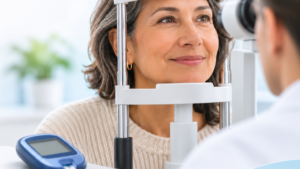
A comprehensive eye exam can sometimes provide the first clue that someone has diabetes. By examining the retina, your doctor may identify blood vessel changes associated with the condition. These findings can prompt a referral for blood testing. An eye exam can raise suspicion, but medical testing is needed to confirm a diabetes diagnosis.

For people already living with diabetes, there is another distinction to understand. Diabetic Retinopathy develops when diabetes damages the small blood vessels in the retina, the light-sensitive tissue at the back of the eye. It can develop without noticeable symptoms, which is why clear vision alone doesn’t tell the whole story.

The AOA recommends a comprehensive dilated eye exam at least annually for people with diabetes. Managing blood sugar and following your recommended eye care schedule can help protect your vision over time.

This November, bring your questions to your Colorado doctor of optometry, or find one here! Whether you’ve noticed a change or simply want to understand the connection, a conversation about your vision can offer useful insight into your overall health.

Eye fact

Infants should have their first
comprehensive eye exam at 6-12 months of age, then at age 3 & 5 and after every year.

Like this article?

Share on facebook
Share on Facebook
Share on twitter
Share on Twitter
Share on linkedin
Share on Linkdin
Share on pinterest
Share on Pinterest

Leave a comment

Scroll to Top